


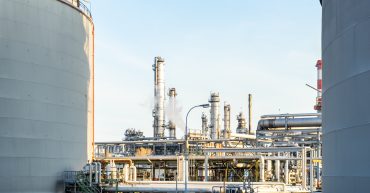
In industry, ensuring the safety, durability, and efficiency of systems is crucial, and pressure testing plays a vital role in achieving this. They are essential for verifying the structural integrity and sealing capacity of piping systems and equipment under pressure. The process involves subjecting a component or system to a pressure greater than its normal […]
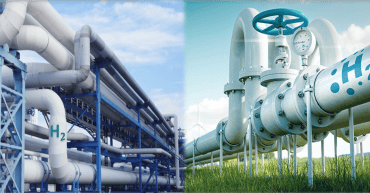
The ASME B31 committee is responsible for codes and standards that cover design, materials, manufacturing, assembly, erection, quality control, inspection, testing, as well as operation and maintenance of piping systems under pressure. Until a few years ago, there was no specific section within this committee for hydrogen piping systems. B31.3 – Process Piping and B31.8 […]
The transportation of hydrogen, a clean and versatile energy carrier, necessitates robust infrastructure to ensure its safe and efficient delivery. Among the crucial standards governing the design of hydrogen pipelines is the ASME B31.12 code, which outlines two primary methods: Prescriptive and Performance-based. Each method offers distinct approaches to pipeline design and safety, both of […]
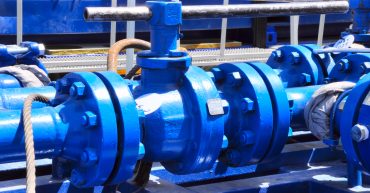
Determining the magnitude of the tightening torque to be applied to a stud or screw in a flanged joint is very important to ensure that a joint seats correctly and is maintained under different conditions, thus achieving what is desired: avoiding leaks. This always taking into account that no permissible value of any component that […]
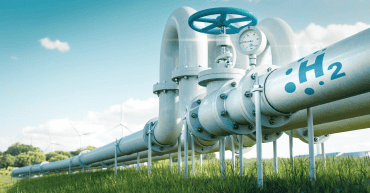
In the quest for a sustainable and decarbonized future, hydrogen is emerging as a key energy carrier with tremendous potential. As the demand for hydrogen increases, the need for safe and efficient infrastructure becomes paramount. The American Society of Mechanical Engineers (ASME) recognized this need and developed the ASME B31.12 code to provide guidelines for […]
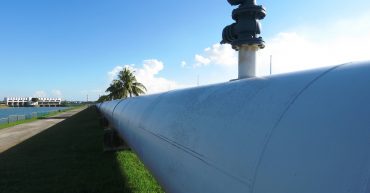
The selection, design, and location of piping supports is an essential part in the study of any industrial process installation. Typically, piping is supported at regular intervals on steel supports embedded in concrete foundations or directly on steel structures. The distance between supports is the span. The allowable spans between supports of horizontal lines are […]