


Design and Operation of Heat Exchangers: Guide to Calculation, Maintenance, and TEMA Standard
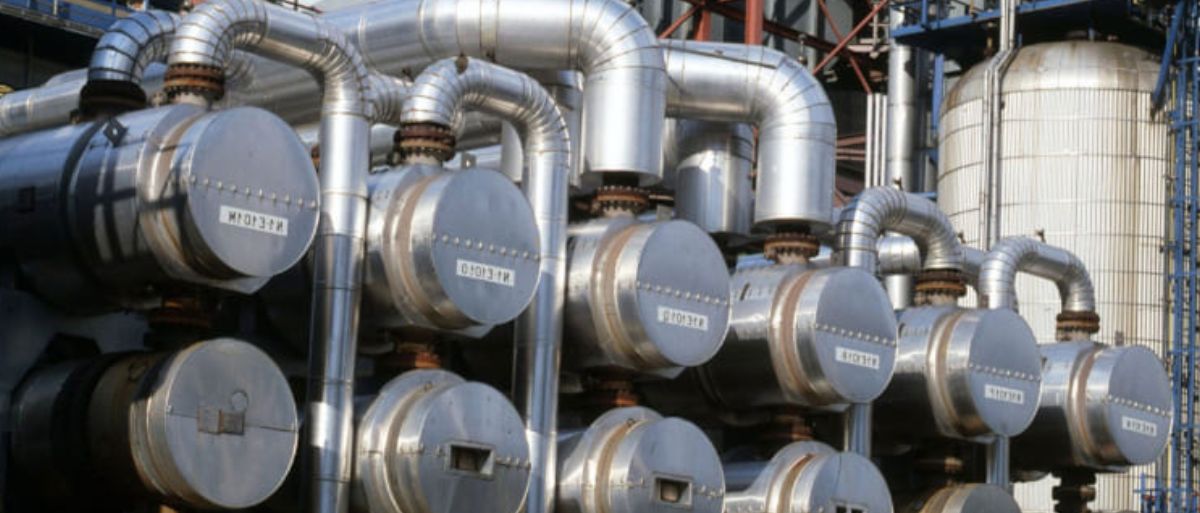
Heat Exchanger Design and Operation is one of the most complex and critical disciplines in process and mechanical engineering. These units are the heart of thermal management in any plant, from petrochemicals to power generation. Their function is straightforward (transferring heat between two fluids), but their design requires a bimodal mastery: thermal calculation for energy efficiency and mechanical calculation for structural integrity. Suboptimal design results in oversized equipment (excessive cost) or, worse, premature failure due to vibration or fatigue.
This Guide is designed to take you through the fundamentals and complexities of Heat Exchanger Design and Operation, focusing on the TEMA standard and the maintenance strategies that ensure long-term performance.
1. Fundamentals of Thermal Calculation: The Basis of Efficiency
Thermal calculation is the first phase of design and determines the basic geometry of the exchanger (heat transfer area, number of tubes, length).
1.1. Overall Heat Transfer Coefficient (U) and Fouling Resistance
The Overall Heat Transfer Coefficient (U) is the key metric of efficiency. It represents the equipment’s capacity to transfer heat.
- Fouling Factor: This is the most critical and often the most misunderstood factor. It represents the additional resistance to heat transfer caused by the accumulation of deposits (scaling, corrosion) on the tube surfaces.
- Impact on Design: An engineer must select a conservative fouling factor. If the factor is too high, the exchanger becomes unnecessarily oversized. If it is too low, the equipment will rapidly lose performance during operation. Selecting this factor is a matter of engineering judgment based on experience with the process fluid.
1.2. Temperature Profile and Driving Force
In the heat transfer process, the temperature distribution between fluids determines the feasibility and size of the equipment. The mean temperature difference acts as the “motor” driving the thermal exchange through the tube surfaces.
- Flow Configuration: The design must evaluate whether the flow is counter-current, parallel, or cross-flow. The choice of configuration directly impacts efficiency, as it determines how close the outlet temperatures of both fluids can be.
- Correction Factors: In multi-pass shell-and-tube exchangers, the thermal profile deviates from the ideal pure counter-current model. Therefore, it is imperative to apply correction factors to ensure that the calculated transfer area is sufficient for actual operating conditions. A design that does not adequately account for these thermal deviations risks failing to meet the required plant heat load.
2. TEMA Standard and Mechanical Configuration
The TEMA (Tubular Exchanger Manufacturers Association) standard is the reference framework for the fabrication and mechanical design of shell-and-tube heat exchangers.
2.1. TEMA Classification and its Impact on Maintenance
TEMA classification (e.g., AEL, BEM, CFU) defines the configuration of the heads, the shell, and the tubesheet type. This classification is crucial because it determines the ease of maintenance and cleaning.
- Fixed Tubesheets: More economical and structurally rigid. However, if the shell-side fluid fouls, mechanical cleaning is impossible, necessitating chemical cleaning methods.
- Floating Heads: These allow for the extraction of the tube bundle for complete mechanical cleaning. They are essential when the temperature difference between the shell and the tubes is high, as they mitigate differential thermal stresses.
2.2. Mechanical Calculation and Structural Integrity
Mechanical calculation ensures that the heat exchanger withstands the design pressures and temperatures.
- ASME VIII: The shell and heads are pressure vessels and must comply with the ASME VIII code (Div. 1 or Div. 2).
- Tubesheet Design: This is the most complex area. It must be designed to resist differential pressure and the stresses induced by thermal expansion and the tube-to-tubesheet joint.
3. Operation, Maintenance, and Critical Failures
The main objective of Heat Exchanger Operation is to ensure that the equipment works within its design parameters. In this context, maintenance plays a fundamental role, as it is responsible for preserving the nominal thermal efficiency and preventing mechanical failures through monitoring and periodic cleaning of the transfer surfaces.
3.1. Flow-Induced Vibration
Vibration is the primary cause of fatigue failure in tubes.
- The Problem: Fluid flow through the shell can induce resonant vibrations in the tubes. If the flow excitation frequency matches the natural frequency of the tube, resonance occurs, which can lead to tube rupture within hours.
- Mitigation: Heat Exchanger Design must ensure that baffle spacing is adequate to keep the tube’s natural frequency outside the excitation range.
3.2. Common Failures and Maintenance Strategies
- Fouling: Loss of performance due to fouling requires constant monitoring of pressure drop and outlet temperature. Cleaning must be scheduled before performance drops below a critical threshold.
- Corrosion and Erosion: Shell-side or tube-side corrosion, and erosion caused by high-velocity fluids, are common failures. Selecting resistant materials and applying inhibitors are essential.
- Predictive Maintenance: Vibration analysis and thermography can detect flow issues or deposit accumulation before a failure becomes imminent.

 WhatsApp