


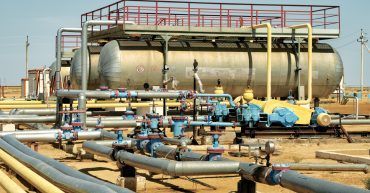
Nowadays, in many types of industrial plants, there are pressure vessels in service that work at temperatures that could be considered as severe, either low (cryogenic) or, conversely, high temperature. One of the main problems that needs to be addressed is the interaction with the support components of these equipment, that is, foundations or supporting […]
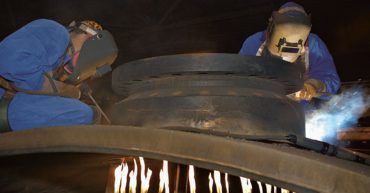
When referring to self-reinforced nozzles, it is generally assumed that the reinforcement to withstand the loads that affect the nozzle will be a constitutive part of the nozzle. This means that self-reinforced nozzles do not need auxiliary elements (like built up nozzles) to withstand design conditions and external loads. On a practical level, self-reinforced nozzles […]
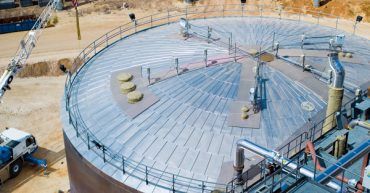
The storage of energy is something convenient and even necessary in various industrial sectors. Energy can be stored in the form of electrical, mechanical or thermal energy. For this purpose, among others, devices such as batteries, flywheels or substances in a different phase than the one at ambient temperature are used. Regarding the last case, […]
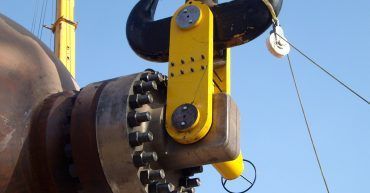
First of all, it should be considered that transport and erection operations of pressure vessels could be focused from two different points of view, which are intrinsically related. On the one hand, the pressure vessel must not be damaged under no circumstances, since the moment the equipment leaves the manufacturer’s workshop until it is installed […]

Conical transitions are really usual in several industrial sectors so that people minimally related to design or manufacturing of pressure vessels are used to deal with them. The shape or these conical sections is mainly imposed by the process in which vessel is immersed. In order to satisfy properly the process needs, the conical part […]
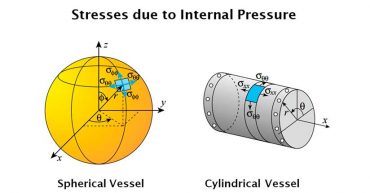
Thin-walled pressure vessels are widely used in industry for storage and transportation of liquids and gases when configured as tanks. For most applications, pressure vessels are either spherical or cylindrical. Depending on the application, pressure vessels will adopt one shape or the other. Most pressure vessels are fabricated from curved metal sheets that are joined […]