


Maintenance and Design of Storage Tanks: A Comprehensive Guide to Mechanical Integrity and Operation
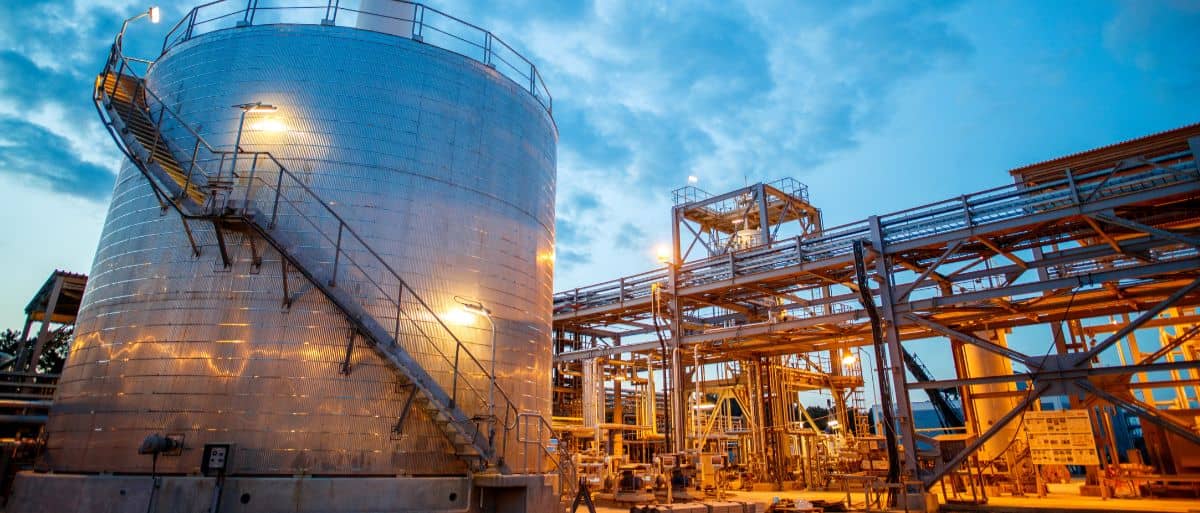
The maintenance and design of storage tanks is not a secondary task; it is a fundamental engineering discipline in industrial plants that requires in-depth knowledge of materials mechanics, corrosion, and the rigorous application of international codes. Atmospheric and low-pressure tanks represent the most vulnerable link in the storage chain for hydrocarbons and chemical products. Their failure can result in massive economic losses, environmental damage, and, most critically, loss of life.
Mechanical integrity of storage tanks is achieved through a lifecycle approach that begins with robust design (API 650), continues with periodic inspection (API 653), and is optimized through predictive maintenance strategies. This comprehensive guide is designed to take you through each phase, providing the technical judgment required to make decisions that ensure reliability and regulatory compliance.
1. Fundamentals of Storage Tank Design
Storage tank design is the starting point for ensuring long-term safety. API 650 (Welded Tanks for Oil Storage) is the reference code for the design and fabrication of welded, vertical, cylindrical tanks operating at atmospheric pressure or with an internal pressure not exceeding 15 psig.
1.1. Design Criteria and Tank Type Selection
The selection of the tank type depends on the vapor pressure of the stored product and environmental considerations.
-
Fixed Roof Tanks: Most common for products with low vapor pressure. Their design is simple, but they require venting systems and emission control.
-
Floating Roof Tanks: Used for volatile products (high vapor pressure). The roof floats on the liquid surface, minimizing vapor space and therefore reducing evaporation losses and fire risk.
Shell Thickness Calculation: The most common method for shell thickness calculation is the one-foot method, which assumes that circumferential stress is maximum at one foot above each horizontal joint. This calculation must consider hydrostatic pressure and future corrosion allowance.
1.2. Critical Design of the Bottom and Foundation
The tank bottom is the component most susceptible to corrosion and settlement-related failures.
-
Bottom Design: It must be designed to support the liquid load and allow proper drainage. The shell-to-bottom joint is a critical high-stress area that requires rigorous design and welding.
-
Foundation: The foundation must support the full load of the filled tank and prevent differential settlement. Non-uniform settlement can induce excessive stresses in the shell and bottom, compromising mechanical integrity of storage tanks.
2. Mechanical Integrity and Tank Maintenance
Maintenance and design of storage tanks is a continuous cycle. Once the tank is in service, inspection and maintenance activities are primarily governed by API 653 (Tank Inspection, Repair, Alteration, and Reconstruction).
2.1. The Corrosion Challenge
Corrosion is the primary threat to mechanical integrity of storage tanks.
-
Internal Corrosion: Caused by water and contaminants in the product, particularly severe at the bottom. Mitigation strategies include protective coatings and corrosion inhibitor injection.
-
External Corrosion: Affects the shell and roof. Corrosion Under Insulation (CUI) is a recurring issue that requires periodic inspection and proper insulation management.
2.2. Risk-Based Inspection (RBI) and Settlement Evaluation
Risk-Based Inspection (RBI) is an approach recommended by API 653 and developed in detail in API 580 and API 581. It allows inspection prioritization based on failure probability and consequences. This methodology is essential for optimizing storage tank maintenance and design, reducing both risk and operating costs.
Settlement evaluation is another critical aspect of mechanical integrity of storage tanks. Both API 653 and EEMUA 159 establish criteria for measuring and analyzing differential settlement. Excessive settlement can compromise structural stability and may require complex operations such as tank lifting and re-leveling, which involve significant risk and cost.

3. Repair, Alteration, and Fitness-for-Service Assessment
Maintenance and design of storage tanks includes the capability to evaluate whether a damaged tank is fit to continue operating.
3.1. Fitness-for-Service (FFS) Assessment
Using API 579 (Fitness-For-Service), engineers can determine whether defects such as thickness loss or dents compromise tank safety. This enables informed decisions regarding repair or replacement.
3.2. Common Repairs
The most frequent repairs include full or partial bottom replacement, shell crack repairs, and nozzle modifications. All repairs must follow the welding and NDE procedures defined in API 653.
Conclusion: Investing in Integrity
Maintenance and design of storage tanks is a direct investment in safety and operational continuity. Mastery of mechanical integrity of storage tanks is what differentiates a maintenance engineer from an asset integrity expert.
Explore our full range of online courses on Storage Tanks and advanced programs designed to provide the technical advantage demanded by the industry.

 WhatsApp