


Differences between API 650 and EEMUA 159: A Guide for Storage Tank Engineers
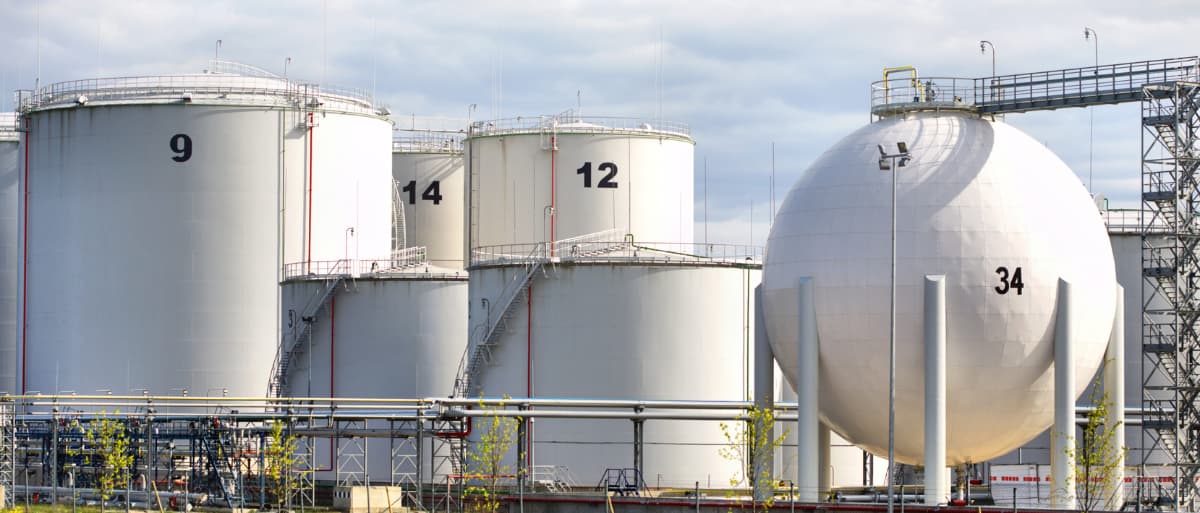
In the field of industrial facility engineering, atmospheric storage tanks constitute one of the most critical and, simultaneously, most regulated assets.
Two of the most widely used international standards for vertical welded steel tanks are API 650 (American Petroleum Institute) and EEMUA 159 (Engineering Equipment and Materials Users Association). Although both share a common objective—ensuring safe and reliable tanks—their philosophy, scope, and technical criteria differ significantly. Understanding these differences is not merely an academic exercise; it has a direct impact on costs, schedules, structural integrity, and operational risk.
Scope and Regulatory Philosophy
API 650 is primarily conceived for the storage of petroleum and chemical products at atmospheric or near-atmospheric pressure, typically involving large diameters and heights. Its approach is prescriptive: it defines in detail calculation formulas, minimum thicknesses, welding procedures, and inspection requirements. In our experience, this regulatory clarity facilitates standardization in refinery and petrochemical plant projects.
In contrast, EEMUA 159 follows an approach more oriented toward the end user and tank lifecycle management. It is not limited to initial design and fabrication but explicitly integrates in-service inspection criteria, integrity assessment, and aging management. Within the scope of storage terminals and tank farms, this holistic vision is particularly valuable.
Structural Design and Calculation Criteria
In API 650, the design of the tank shell is based on membrane theory with dominant hoop stresses, utilizing stiffening ring methods and variable course thicknesses. The standard establishes conservative allowable stress limits and accounts for loads such as wind, seismic activity, and differential settlement.
EEMUA 159, on the other hand, allows for a greater degree of engineering based on advanced structural analysis, including numerical methods when necessary. While API 650 tends to be more conservative regarding minimum thicknesses, EEMUA 159 prioritizes optimization based on risk and actual operating conditions. In some cases, the use of EEMUA allows for a reduction in steel weight without compromising safety, thanks to detailed load and degradation studies.
Materials, Welding, and Fabrication
API 650 specifies with high precision the allowable steel grades, toughness requirements, and welding procedures. Its approach is particularly strict regarding quality control during fabrication, with clear requirements for non-destructive testing (NDT).
EEMUA 159 is more flexible in material selection, provided that suitability for the intended service is demonstrated. it places greater emphasis on compatibility with the stored product, internal and external corrosion, and protection via coatings. This can be key for tanks storing aggressive products or those subjected to severe thermal cycles.
In-Service Inspection and Maintenance
This is one of the most significant differences. API 650 focuses fundamentally on design and construction; for in-service inspection, it is usually complemented by API 653, a specific standard for tanks in operation.
EEMUA 159, for its part, integrates inspection and maintenance strategy from the outset, including evaluation criteria for corrosion, settlement, deformation, and fatigue. In asset management projects, this integration can reduce uncertainties and facilitate Risk-Based Inspection (RBI) plans.
Seismic and Geotechnical Considerations
API 650 provides relatively simplified methods for evaluating seismic loads, suitable for many standard sites. However, in high-seismicity zones, these simplifications may be insufficient.
EEMUA 159 allows—and occasionally encourages—the use of more detailed analyses, including soil-structure interaction and non-linear behavior of the shell and base. In projects located in seismic regions, this approach can be decisive in preventing catastrophic failures due to sliding or shell buckling.
Typical Industrial Applications
In refineries and large-scale petrochemical plants, API 650 remains the dominant reference due to its regulatory recognition and alignment with other oil sector standards. For crude oil, diesel, or refined product tanks, its application is virtually universal.
EEMUA 159 is frequently employed in storage terminals, specialized chemical facilities, and plants where long-term integrity and aging management are priorities. It is also highly useful for existing tanks requiring advanced structural assessment or significant modifications.
Frequent Errors and Best Practices
Based on our experience in real-world projects, we have identified several common errors:
-
Treating the standard as a mere documentation formality, rather than a technical guide that must be critically understood and applied.
-
Applying API 650 in construction without planning for future inspection, creating subsequent difficulties under API 653.
-
Underestimating internal corrosion, especially in tanks containing water or contaminants.
-
Failing to integrate adequate geotechnical studies, which can lead to hazardous differential settlements.
Key best practices to highlight include:
-
Aligning the client’s regulatory requirements with the plant’s maintenance strategy from the conceptual phase.
-
Incorporating early corrosion and geotechnical studies into the design.
-
Implementing Risk-Based Inspection, regardless of whether the tank was designed under API 650 or EEMUA 159.
-
Rigorously documenting any deviation or alternative engineering.
Conclusion
API 650 and EEMUA 159 are not rival standards, but rather complementary tools with different philosophies. API 650 offers a robust prescriptive framework for the design and construction of new tanks in the oil and petrochemical industry. EEMUA 159 provides an integral vision centered on structural integrity and asset lifecycle management.
Our challenge as engineers is to deeply understand both references, apply them correctly according to contractual and regulatory requirements, and complement their scopes with engineering best practices that guarantee safer, more reliable, and more durable tanks.

 WhatsApp